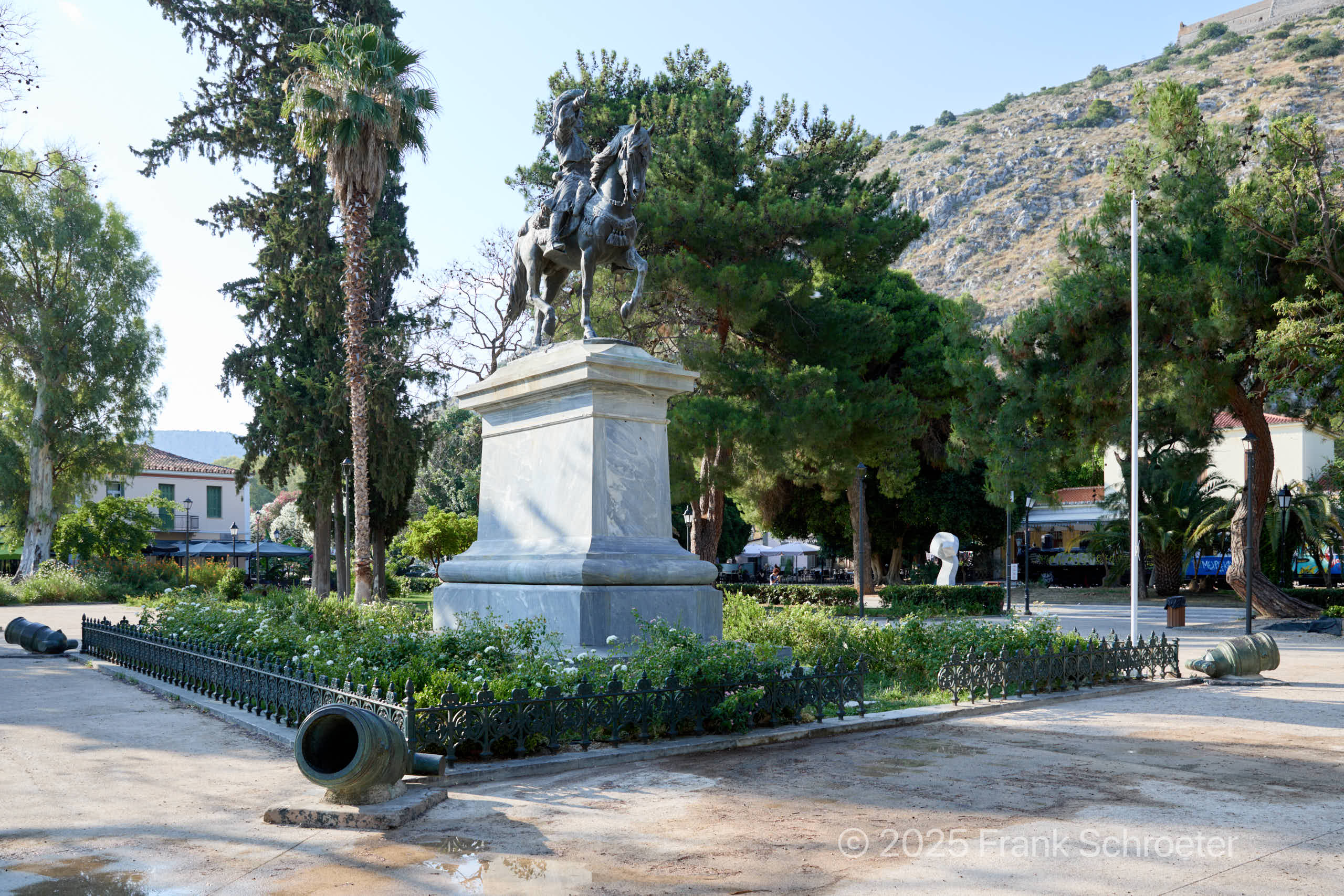
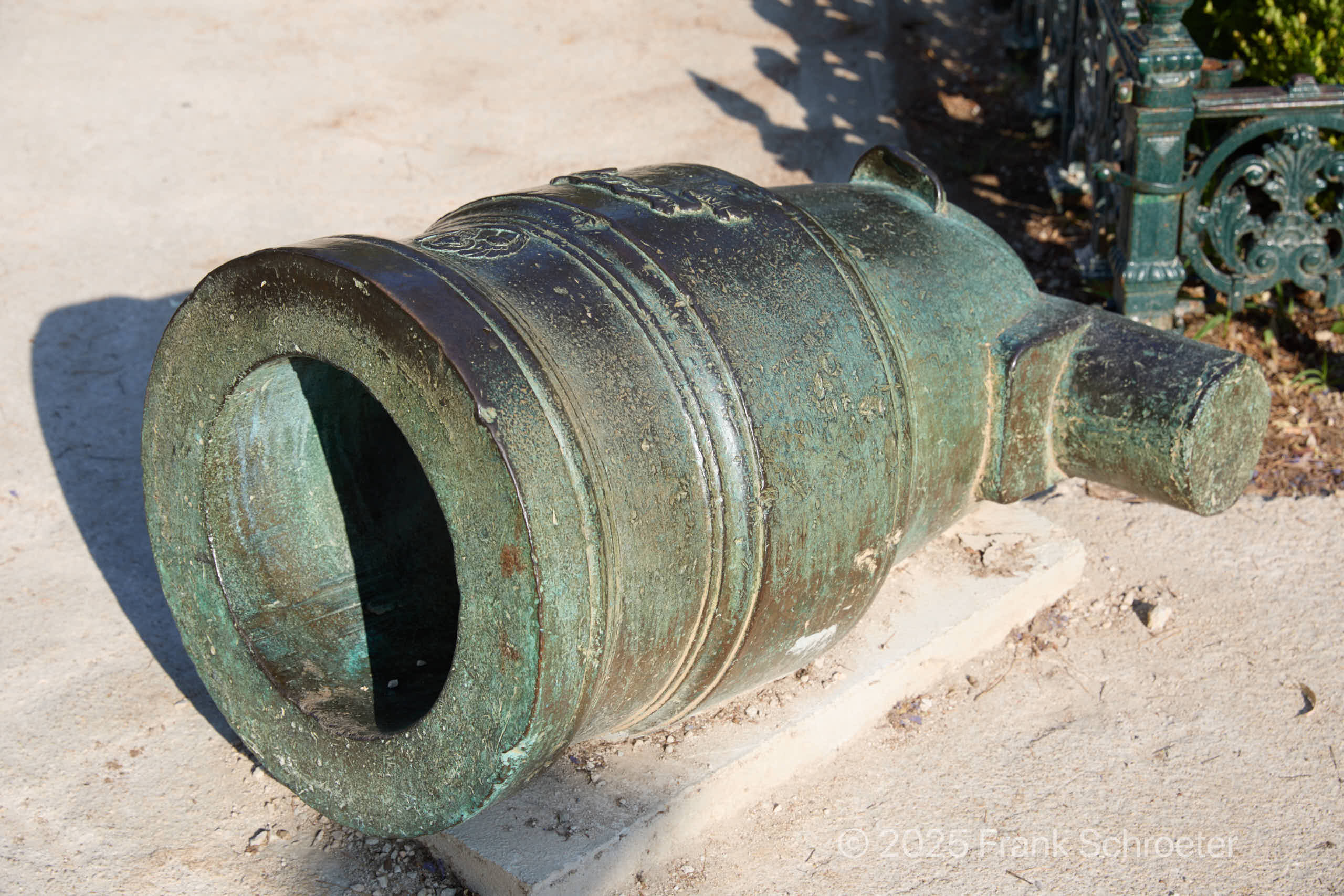
The statue of Theodoros Kolokotronis, an imprtant figure in the Greek struggle for independence from the Ottoman Empire, is adorned with four bronze mortars, original artifacts from this very struggle, which dragged on over centuries.
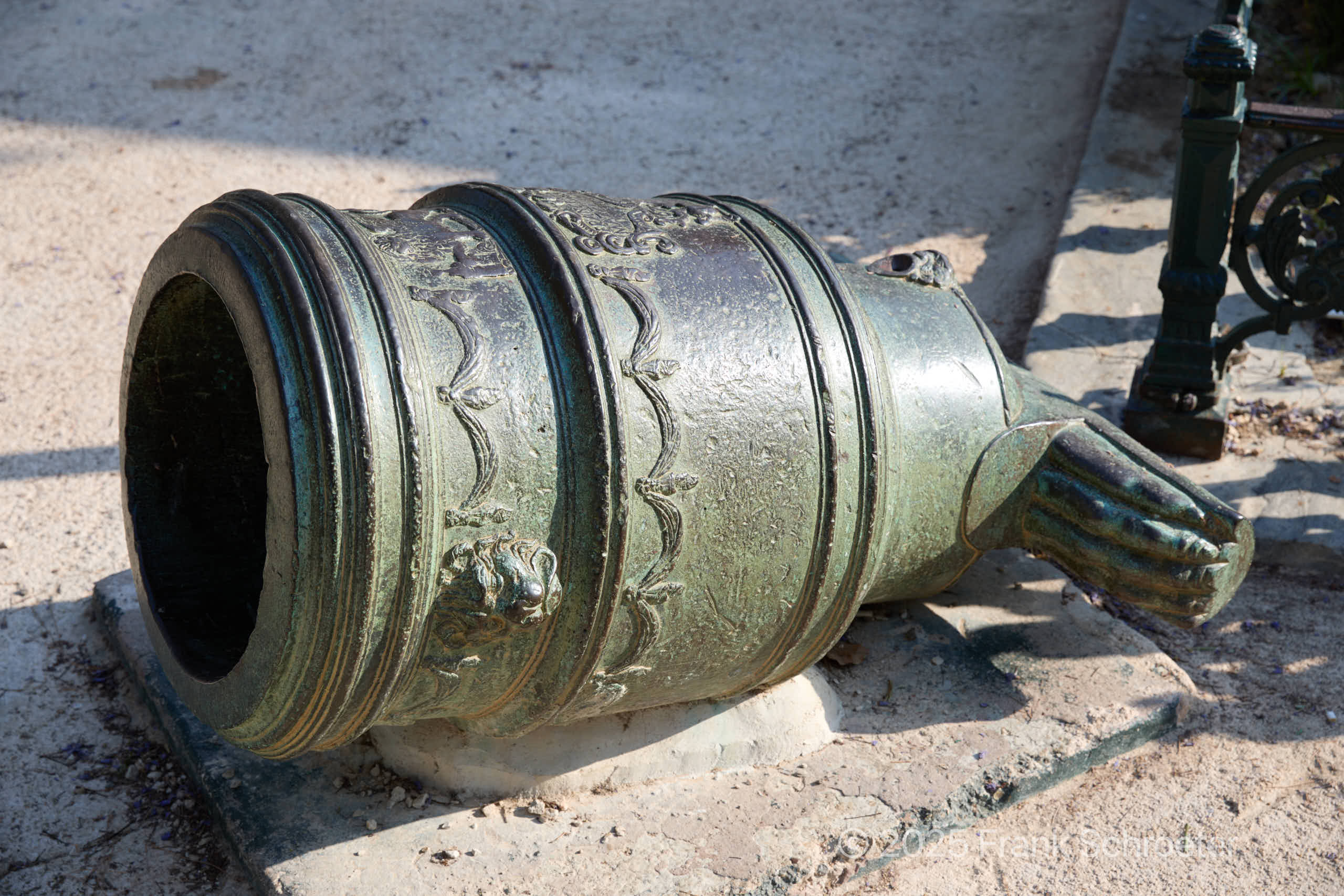
Like in other places on the Greek coastline, Nafplio was a port controlled by the Venetians in the 17th century. They fortified the harbour and built a massive fort on the hill above town. Three of the mortars are from this period.
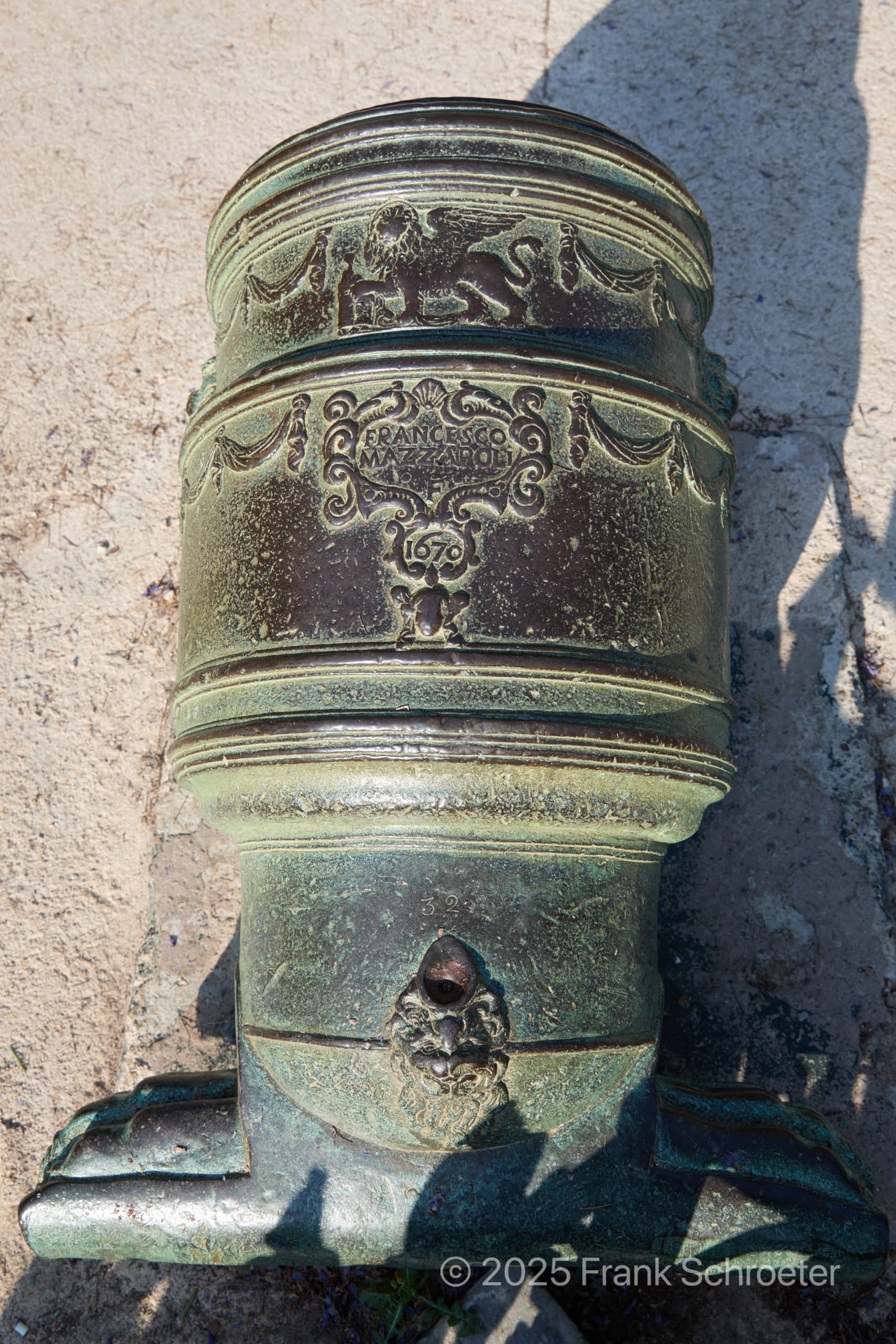
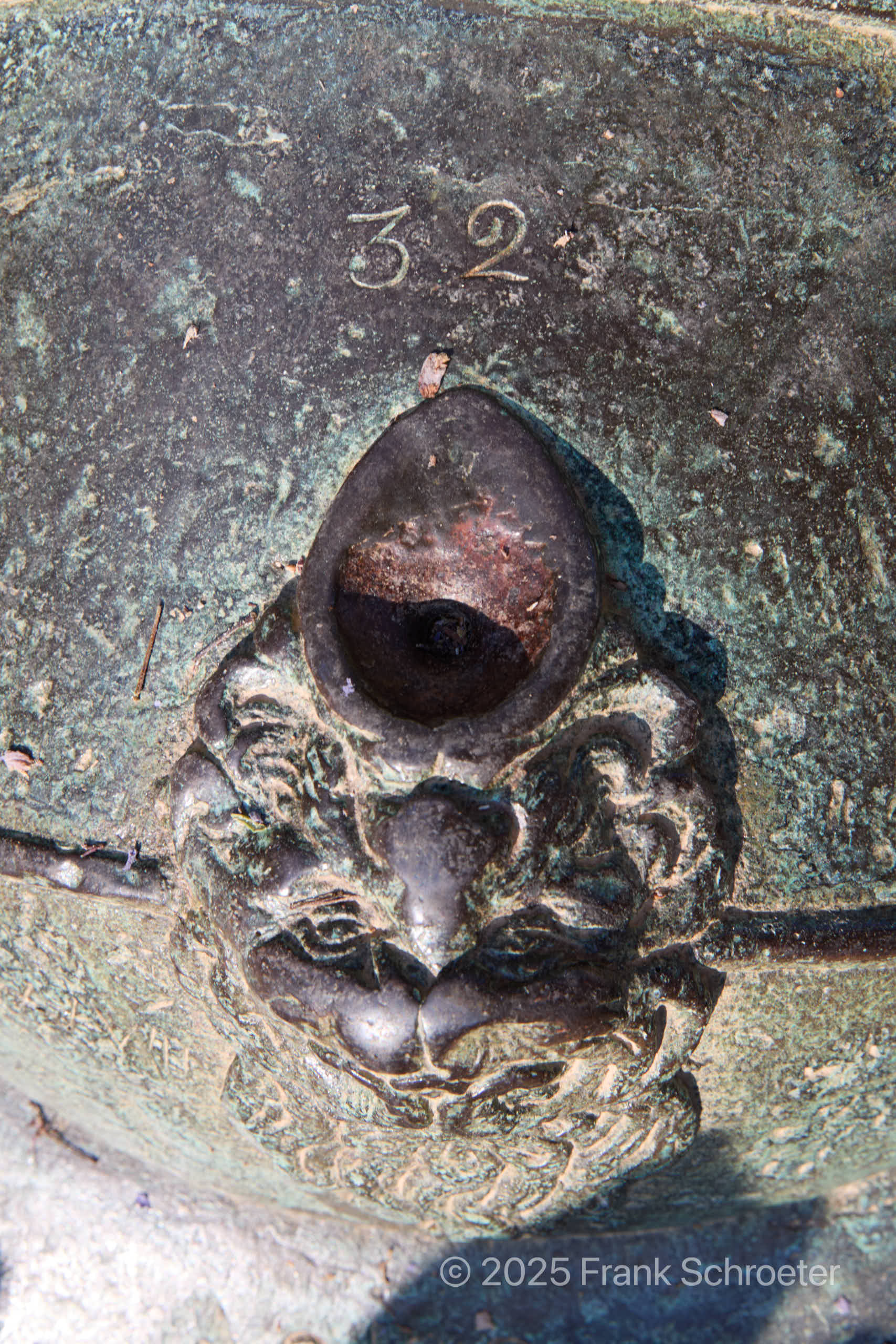
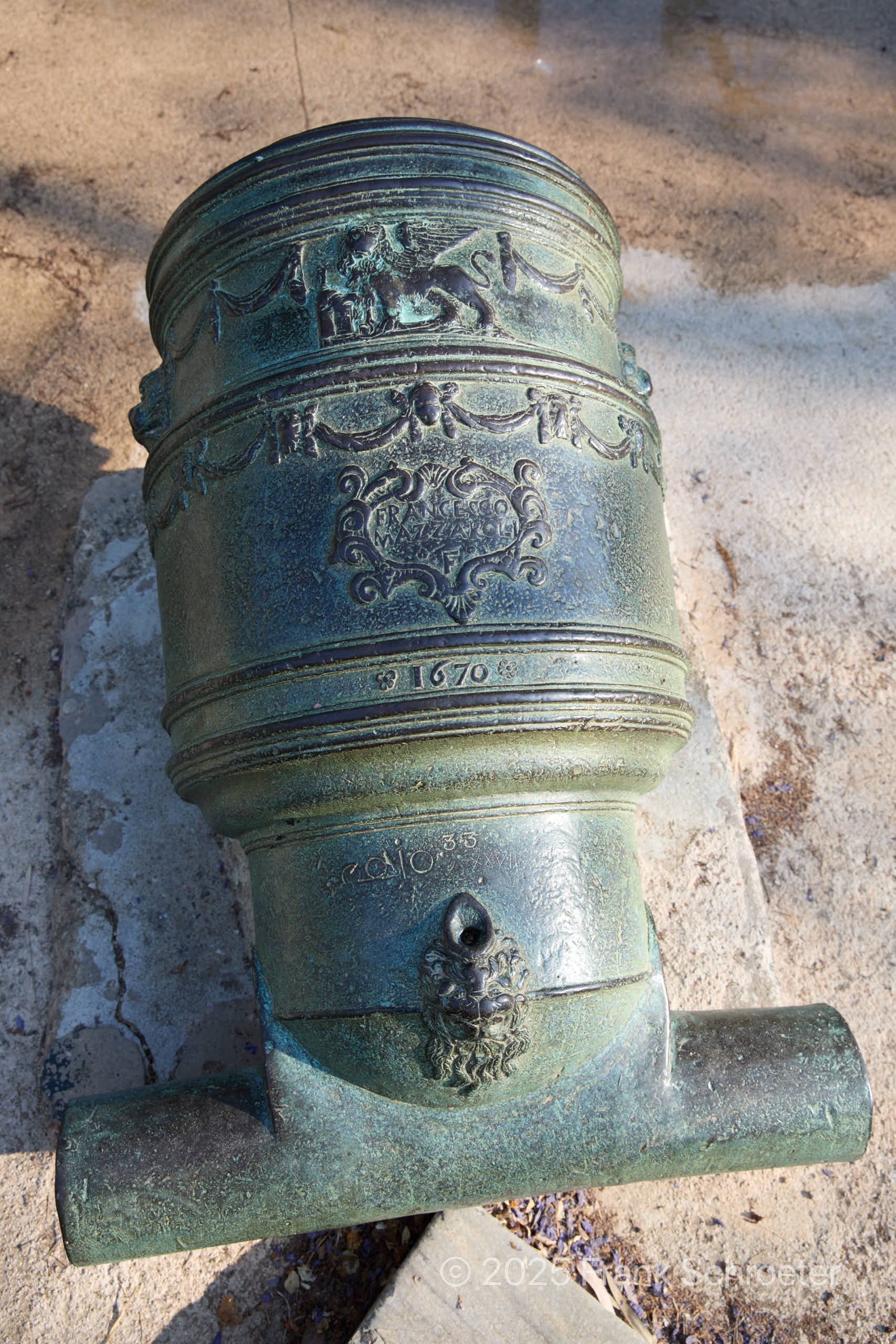
The craftsmanship of these pieces is impressive. Towards the muzzle sits the Venetian winged lion. Left and right in the same section are lion heads in high relief. The middle seaction features an unusually prominent maker’s mark. The last section of the wide part of the barrel has the production year, 1670. The powder chamber has an inventory number, 32. The touch hole is again decorated with a lion face.
Interestingly, the orientation of the lion face on the touch hole is upside down from the other decorations.
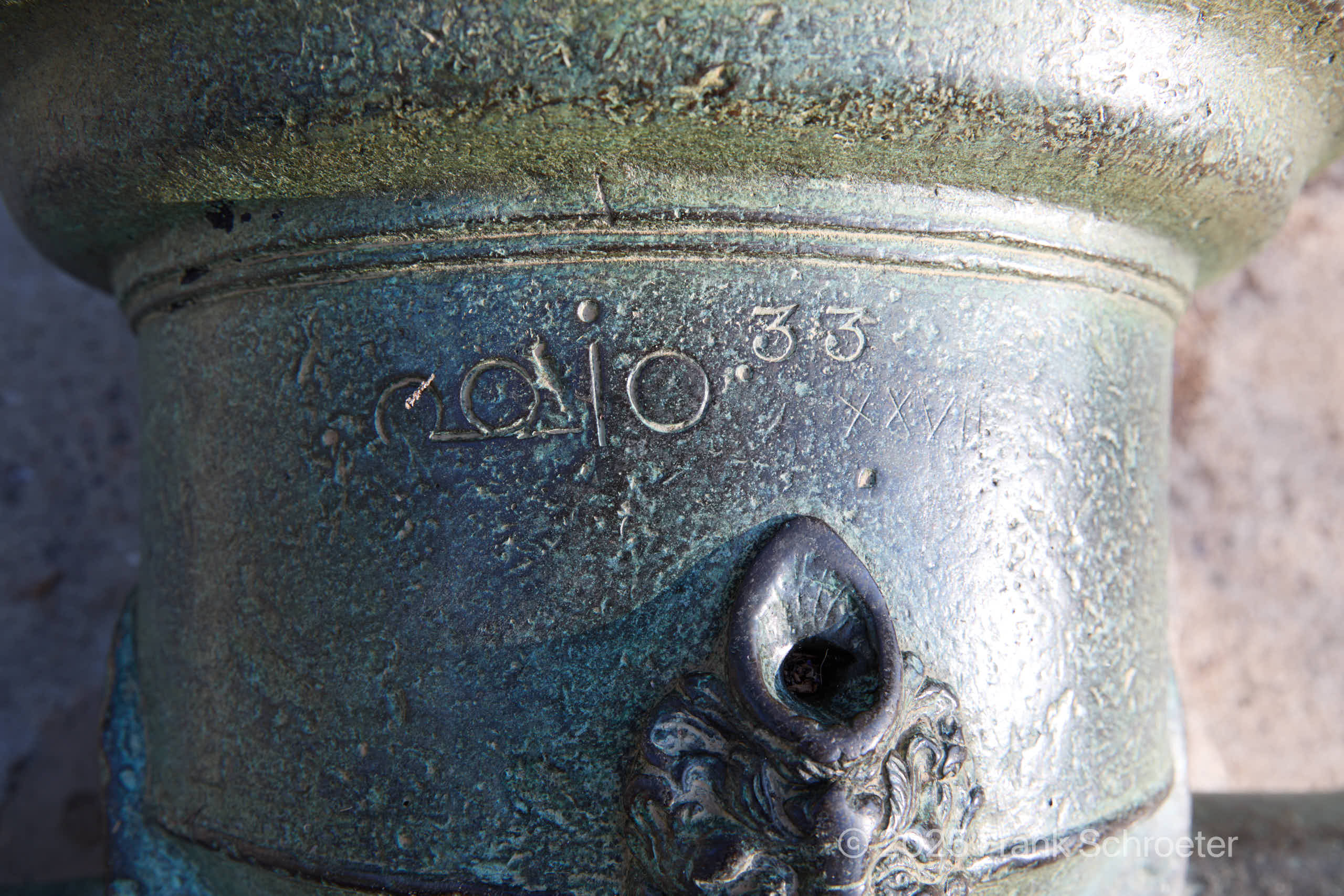
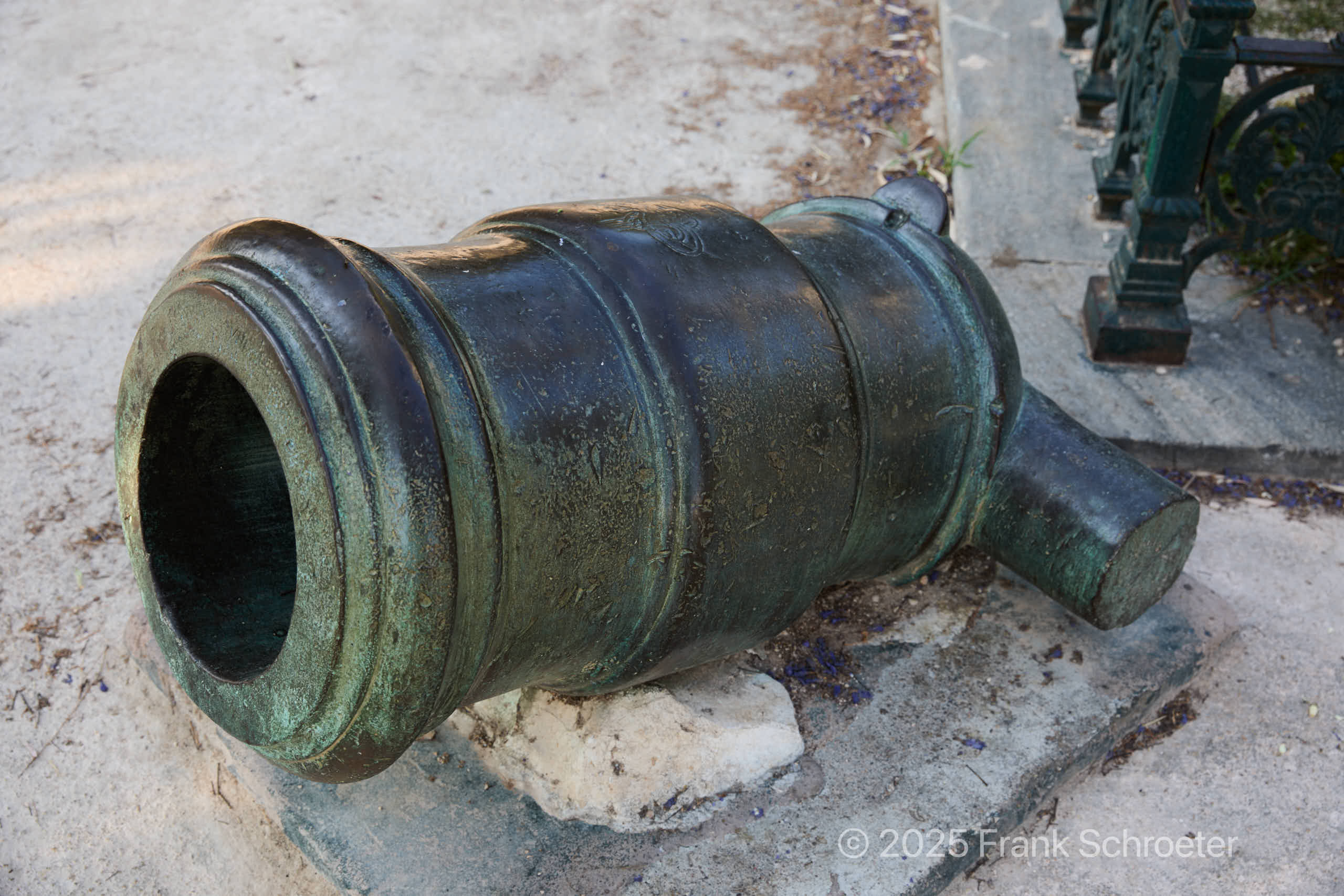
Another mortar from same series. It is identical, execpt for something that may be an additional inventory mark next to the inventory number 33.
Close-up of the powder chamber of number 33. The meaning of the symbol next to the 33 is unknown to me.
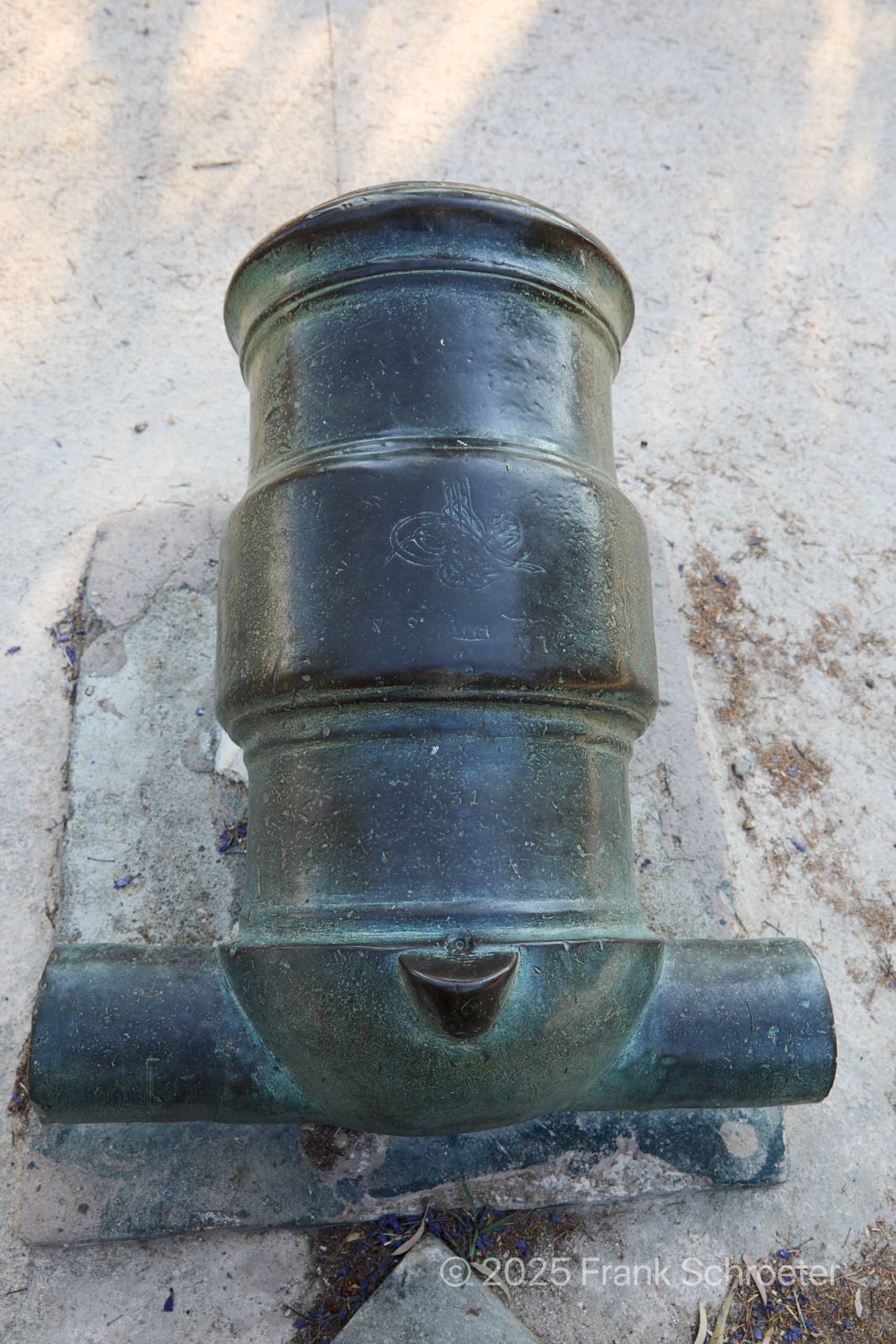
This mortar is from the other side of the frontline – a somewhat more somber design from the Ottoman arsenal.
This piece has no maker’s mark, at least not anymore. The seal on the middle section is the Tughra of Abdülhamid II, Sultan of the Ottoman Empire from 1876 to 1909. That would be quite late to cast a cannon like this. Possibly this mortar was captured by the Ottomans and rebranded.
The rear section features inventory number 31.
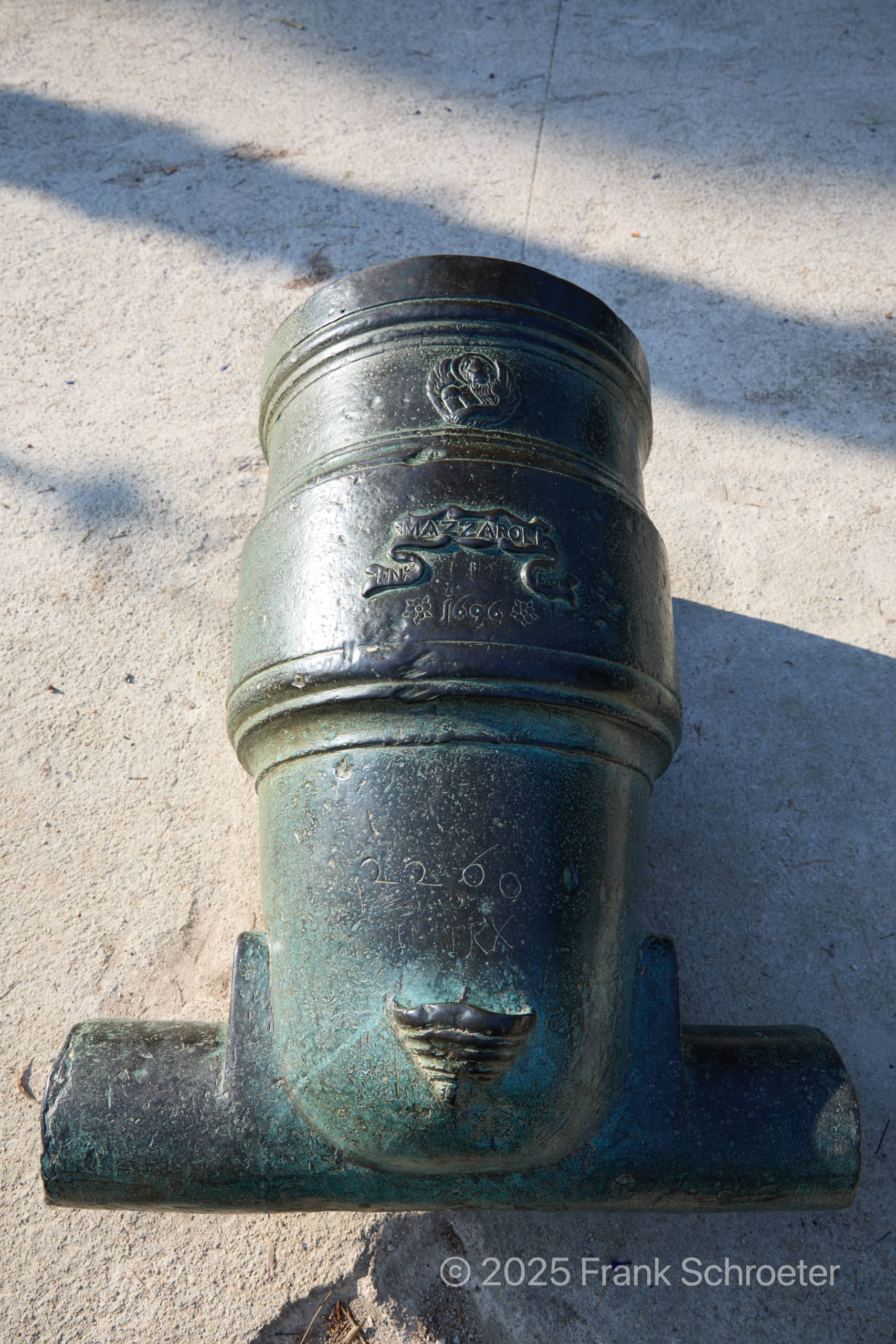
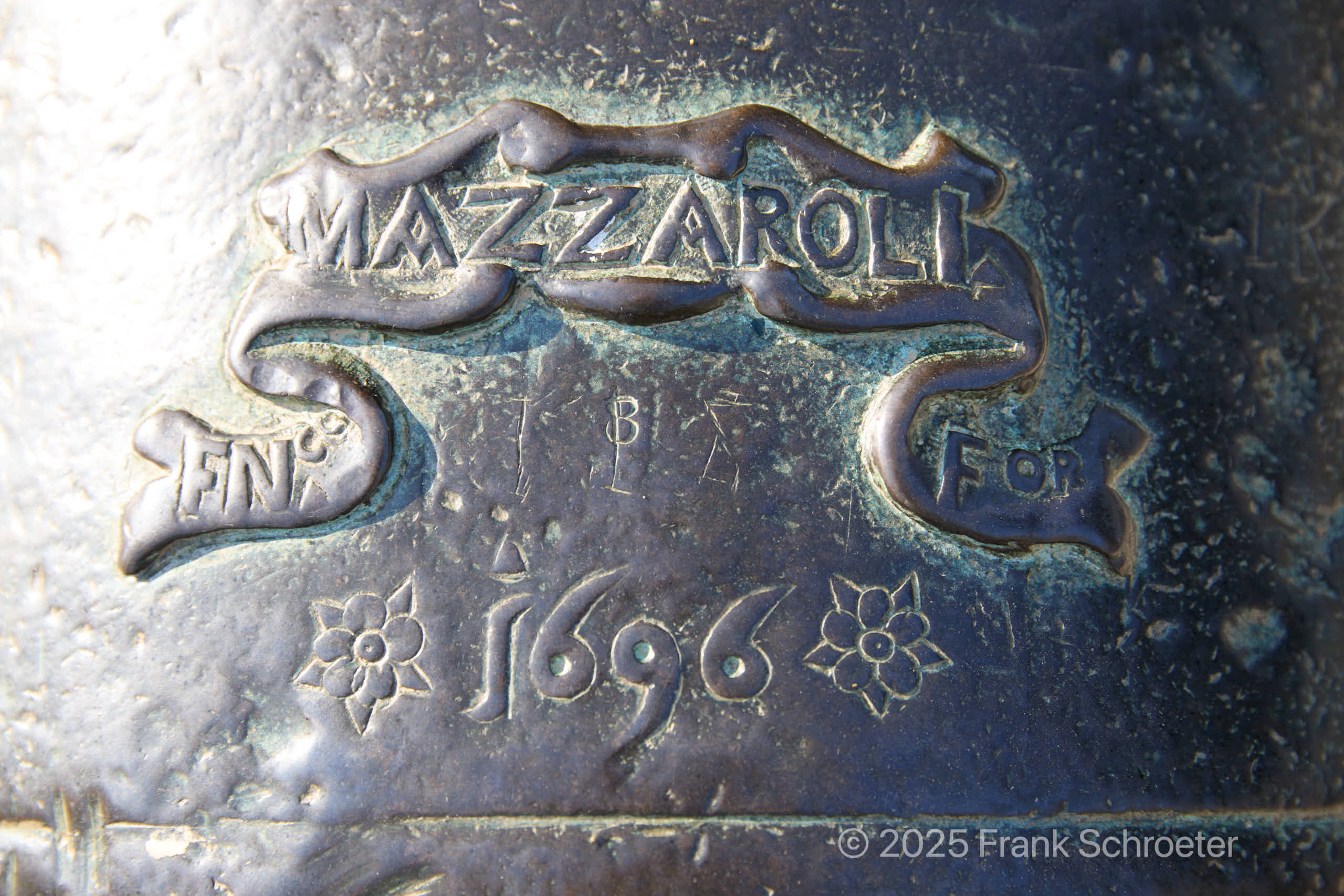
This is again a piece by the Mazzaroli workshop, but from 1696, 26 years younger than the first two. It is much reduced in its decorations. The similariy with the Abdülhamid II mortar is striking.
Unlike the first three mortars, this one does not have an invortory number in the 30s – it is instead 2260, and very much scribbled compared to the others.
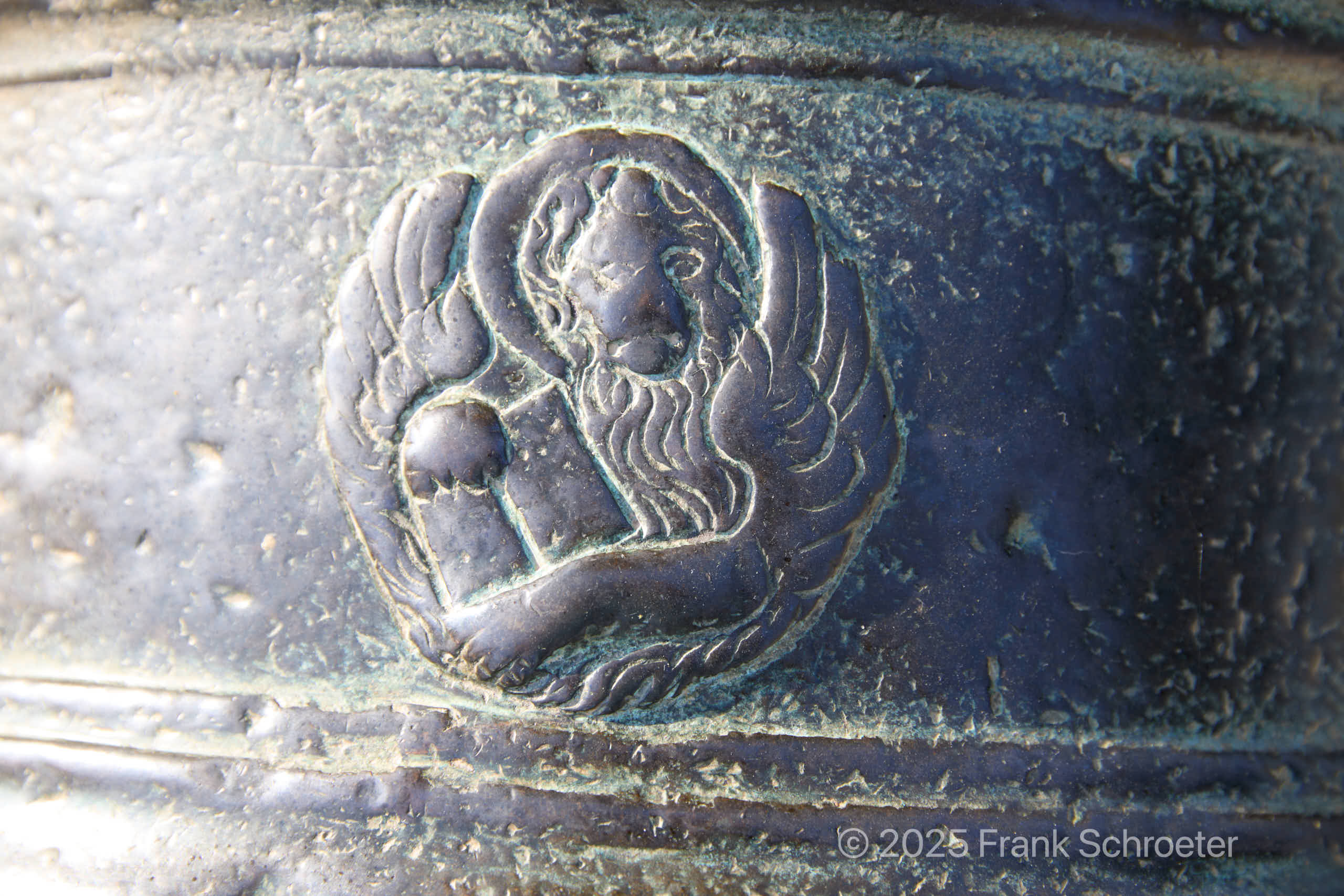
Still a winged lion, just a little smaller.
Comparing this maker’s mark with the ones from 1670, one cannot help but notice a slight decline. In 1715, the Ottomans captured the Nafplio Fortress. In 1822, the Greek captured it back.